Technical Q&A

Inductive vs capacitive sensor difference

Inductive vs capacitive sensor difference for buyers: compare metal detection, non-metal/liquid detection, capacitive inductive searches, wiring and replacement risk.

Short answer: Use inductive sensors for metal targets. Use capacitive sensors for non-metal, powder or liquid detection, but confirm sensitivity, background and mounting before replacement.
QuestionTechnical ExplanationIllustrationFAQ

Direct Answer for Buyers

Inductive sensors are best for metal targets. Capacitive sensors can detect non-metal materials, powder or liquid, but need more sensitivity and background checks. A capacitive inductive sensor search usually means the buyer is comparing these two families.

  • Use inductive when the target is metal and the machine frame is stable.
  • Use capacitive for plastic, glass, powder, liquid or level detection through non-metal walls.
  • For replacement, match output, voltage, body size and mounting style after choosing the sensing principle.

Search questions covered

inductive vs capacitive sensorcapacitive inductive sensorinductive and capacitive sensor difference

Question

What is the difference between inductive and capacitive sensors?

Detailed Technical Explanation

Inductive sensors detect metal targets. Capacitive sensors can detect non-metal materials such as plastic, powder or liquid. A capacitive inductive sensor search usually means the buyer is comparing these two sensor families before selecting a replacement.

For real industrial purchasing, the safest method is to compare the old part, the electrical input, the mechanical fit and the application before treating two models as interchangeable.

Engineering Decision Table

Inductive sensorBest for metal targets and stable machine position detection
Capacitive sensorCan detect plastic, powder, liquid and non-metal materials
StabilityInductive is usually more stable around metal machines
AdjustmentCapacitive sensors often need sensitivity adjustment on site
J&V checkAsk what material must be detected and what background is nearby

Use inductive for metal. Use capacitive when the target is non-metal or liquid, but expect more on-site adjustment.

Common Buyer Mistakes

  • Choosing by product photo while ignoring wiring and output
  • Replacing by brand series without checking suffix details
  • Ignoring target material, mounting clearance or background
  • Not testing one sample before repeat purchasing

J&V Practical Check

For Inductive vs Capacitive Sensor, J&V Automation asks for the model label, installed photo, voltage, wiring and target/application details before recommending a part.

Evidence and Buyer Proof

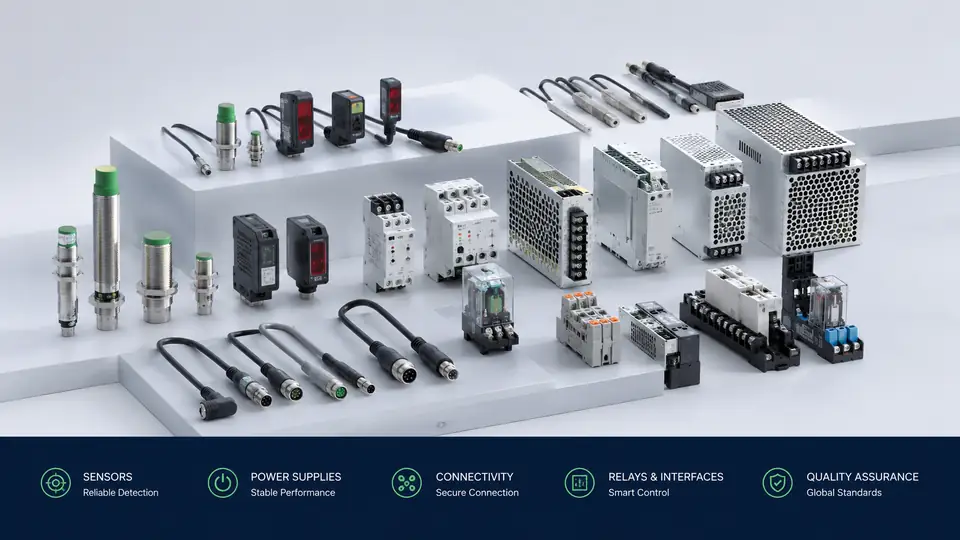
J&V Automation industrial sensor and power supply product matrix

Real Product Scope

J&V connects GEO answer pages with the public product catalog, PDF catalogs and live model search.

Open product catalog
J&V Automation product and shipment proof

Quotation Proof Workflow

Buyers can request label photos, packaging photos, stock checks, export documents and shipping route support.

Open logistics proof

Illustrations

Application question Correct selection Inductive vs Capacitive Sensor

FAQ

What is the difference between inductive and capacitive sensors?

Inductive sensors detect metal targets. Capacitive sensors can detect non-metal materials such as plastic, powder or liquid. A capacitive inductive sensor search usually means the buyer is comparing these two sensor families before selecting a replacement.

What information helps J&V Automation answer faster?

Send the model number, label photo, installed photo, target material, voltage, output type and quantity.

Can this topic affect replacement selection?

Yes. Wiring type, mounting style, sensing mode and environment often decide whether an alternative will work correctly.

Related Products

Get Quote

Send the model number, photo, quantity, destination country and key specs. J&V Automation will confirm whether Inductive vs Capacitive Sensor can be supplied directly or matched with an alternative.

Reviewed by J&V Automation

Technical reviewJ&V Automation technical sales team
Last reviewed2026-06-21
What we checkModel code, label photo, wiring, sensing distance, mounting, voltage, output and application environment
Contact[email protected] / WhatsApp +8615760316814
Page typeknowledge answer page

For final ordering, J&V Automation asks buyers to send the old label, installed photo, quantity and destination country before confirming an alternative.